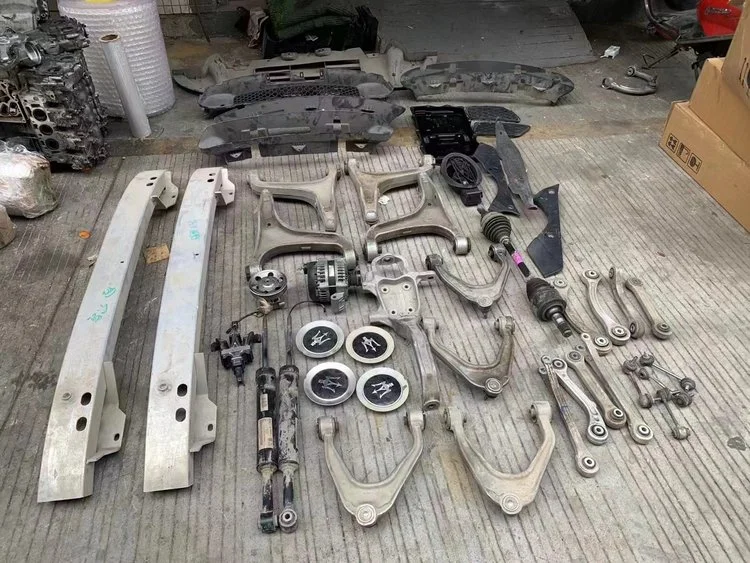
Buying used Maserati parts can be a cost-effective solution for repairing luxury vehicles, especially when new OEM components are expensive or difficult to source. However, for repair shops, body shops, and professional parts distributors, choosing the wrong used part can lead to installation problems, electrical faults, delayed repairs, and additional costs.
A component may look clean in photos but still have hidden corrosion, structural damage, or signs of previous refurbishment. Checking the part number alone is not enough to guarantee its condition or compatibility.
So, how can professional buyers inspect used Maserati parts before placing an order?
This guide explains how to identify potential flood damage, accident damage, and refurbishment, verify part compatibility using the VIN and OE number, and reduce purchasing risks when sourcing genuine OEM used Maserati parts.
Flood damage is particularly concerning when purchasing electronic components, interior assemblies, and mechanical parts. Water exposure can cause corrosion and electrical problems that may not appear immediately.
Before purchasing a used Maserati component, ask the supplier for detailed photographs of its connectors, mounting points, metal surfaces, and any areas that are difficult to inspect.
Check Electrical Connectors and Terminals
For electronic modules, control units, wiring harnesses, and sensors, inspect the connector pins carefully.
Potential warning signs include:
● Green or white corrosion around metal terminals.
● Rust or water residue inside connector housings.
● Damaged seals or signs of moisture intrusion.
● Unusual oxidation around mounting brackets or exposed metal surfaces.
For example, a Maserati electronic control module may have a clean outer casing while its connector terminals show signs of corrosion. This is why external appearance alone cannot confirm that an electronic part is fully functional.
Ask the supplier whether the component has been inspected or tested and request the actual test results when available.
Inspect Interior Parts and Hidden Areas
When purchasing Maserati seats, dashboards, door panels, carpets, or center consoles, check areas where moisture and dirt can accumulate.
Look for:
● Watermarks or unusual staining.
● Mud or dirt in hidden seams and cavities.
● Rust on seat frames, brackets, and metal fasteners.
● Corrosion on seat connectors and electrical adjustment components.
Inconsistent materials or strong cleaning-product odors that may indicate previous treatment.
These signs do not independently prove flood damage, but several warning signs together justify a more detailed inspection.
For more background on flood-damage indicators, see the NHTSA guide to flood-damaged vehicles.
Accident-damaged parts can sometimes be reused, but their suitability depends on the type and severity of the damage.
For body shops and collision repair specialists, the key is to distinguish between a component with acceptable cosmetic wear and one with structural damage that affects installation, alignment, or safety.
Inspect Body Panels and Exterior Components
When sourcing used Maserati doors, fenders, bonnets, bumpers, or tailgates, examine the following areas:
● Mounting holes and fixing points.
● Panel edges and structural folds.
● Brackets, hinges, and reinforcement areas.
● Paint consistency and possible signs of repainting.
● Cracks, deformation, or uneven gaps around the component.
Original factory paint can be a useful reference when assessing a body panel, but it does not guarantee that the component has never been damaged.
A panel may have its original paint on the visible surface while suffering damage to a mounting bracket or inner structure.
Ask for photographs of both the exterior and the reverse side. For larger components, request a short video showing the mounting areas and overall condition.
Check Mechanical Parts for Impact Damage
Suspension arms, steering components, subframes, and related mechanical parts require more careful evaluation.
Look for bent components, cracked housings, damaged threads, distorted mounting points, or impact marks.
Parts involved in a collision may appear usable but could have hidden damage that affects safety or alignment. Critical safety-related components should be assessed against the applicable manufacturer repair procedures and replaced when required.
For professional buyers, confirming the donor vehicle's damage location can also help determine which components are worth considering.
Refurbishment is not automatically a problem. Some components can be professionally repaired or restored. The concern is when a seller describes a refurbished part as an untouched original used component without disclosing its condition.
Check Labels, Markings, and OE Numbers
For genuine OEM used Maserati parts, inspect the identification label, OE number, manufacturer markings, and connector configuration where applicable.
Potential warning signs include:
● Missing or altered identification labels.
● Markings that do not match the quoted part number.
● Inconsistent casing finishes or visible repair marks.
● Non-original fasteners or damaged sealing surfaces.
● Differences between the advertised part and the actual photographs.
No single sign proves that a part is counterfeit or refurbished. Some genuine components may have replacement labels, while certain repairs may be legitimate. Verification should consider multiple details together.
Compare the Part with Reference Information
Compare the supplied component with reliable parts-catalog information and photographs of the corresponding original component.
Check the casing shape, mounting points, connector layout, dimensions, and part-number suffixes.
Be particularly careful with electronic modules. A physically similar module may have different hardware, software, or vehicle-configuration requirements.
If the supplier cannot provide a clear identification label or explain visible repair marks, request further evidence before committing to the purchase.
VIN verification is one of the most important steps when purchasing used Maserati parts for professional repairs.
A VIN identifies the vehicle, but it does not independently establish the condition, authenticity, or service history of an individual used component. The most reliable approach is to combine VIN information with OE-number checks and physical inspection.
Step 1: Obtain the Vehicle VIN
Ask the customer or repair shop for the vehicle's 17-character VIN, where applicable.
Use the VIN to identify the vehicle model, model year, and relevant configuration through an appropriate vehicle or parts-catalog reference.
Do not assume that two Maserati vehicles with the same model name and year necessarily use identical components.
Step 2: Confirm the Original OE Part Number
If the original component is still available, obtain its OE number from the label or existing parts documentation.
Compare that number against the proposed replacement and check for superseded numbers or documented part-number substitutions.
A matching number is useful evidence, but it may not resolve every compatibility issue. Some components have production-date restrictions, software differences, or configuration-specific variations.
Step 3: Check Physical and Electrical Compatibility
For body parts, compare dimensions, mounting points, connectors, and relevant trim or equipment differences.
For electronic modules, verify the required hardware version, software compatibility, coding requirements, and any necessary programming procedures.
For suspension and mechanical components, confirm the correct axle position, side, specification, and vehicle configuration.
Step 4: Confirm What Has Actually Been Verified
Ask the supplier to clarify whether compatibility has been checked against the VIN, OE number, or both.
Also confirm whether the part has undergone visual inspection, functional testing, or diagnostic testing. These are different levels of verification and should not be treated as interchangeable.
For additional guidance on genuine components and original fit, consult Maserati's genuine parts information.
5. What Professional Buyers Should Ask Before Ordering
Before purchasing used Maserati parts, repair shops and distributors should request enough information to evaluate both compatibility and condition.
Use this checklist:
● Vehicle information: Model, model year, and VIN.
● Part identification: OE number, label photographs, and component details.
● Condition evidence: Clear photographs of all sides, connectors, mounting points, and visible defects.
● Damage disclosure: Any known impact damage, corrosion, repairs, or refurbishment.
● Testing status: Whether the part has been visually inspected or functionally tested, and what the test covered.
● Compatibility: Confirmation of relevant OE-number and VIN checks.
● Commercial terms: Price, availability, warranty coverage, return conditions, and shipping arrangements.
For B2B orders involving multiple components, request a consolidated parts list and verify each item's part number and condition before shipment.
These checks are especially important for international buyers who may face additional freight costs and delays if a component arrives damaged or proves incompatible.
The supplier's inspection and documentation process matters just as much as the part itself.
A professional supplier should be able to provide actual product photographs, clear part-number information, honest condition descriptions, and reasonable support with compatibility checks.
Before confirming an order, ask for:
● Actual photographs of the available component rather than generic reference images.
● Close-ups of OE labels, connectors, and mounting points.
● Videos or test records when applicable.
● Clear disclosure of known defects or previous repairs.
● Secure export packaging and documented shipping arrangements.
● Written warranty terms and an agreed procedure for handling discrepancies.
For dismantled parts, information about the donor vehicle and the component's removal and inspection process can provide additional context. However, donor information should be supported by available records rather than assumptions.
The goal is not simply to find the cheapest part. It is to source a suitable component with a verifiable identity, an honestly described condition, and a compatibility check appropriate to the repair.
For repair shops, collision centers, and professional parts distributors, sourcing the correct Maserati component requires more than matching a model name.
At Pbba Auto Parts Co., Ltd, we supply luxury vehicle dismantled parts and aftermarket components, with support for identifying suitable parts through available OE-number and vehicle information.
When requesting a quotation, please provide:
● Maserati model and model year.
● VIN, if available.
● OE part number or the original part label.
● Required component and quantity.
● Photos of the original part, if available.
Our team can help check the available part information, confirm stock details, and provide actual product photos for evaluation before shipment.
Looking for a specific used Maserati part?
Send us your VIN, OE number, or parts list to discuss availability and compatibility.
Contact us to request a quotation for your next Maserati repair or parts order.

 EN