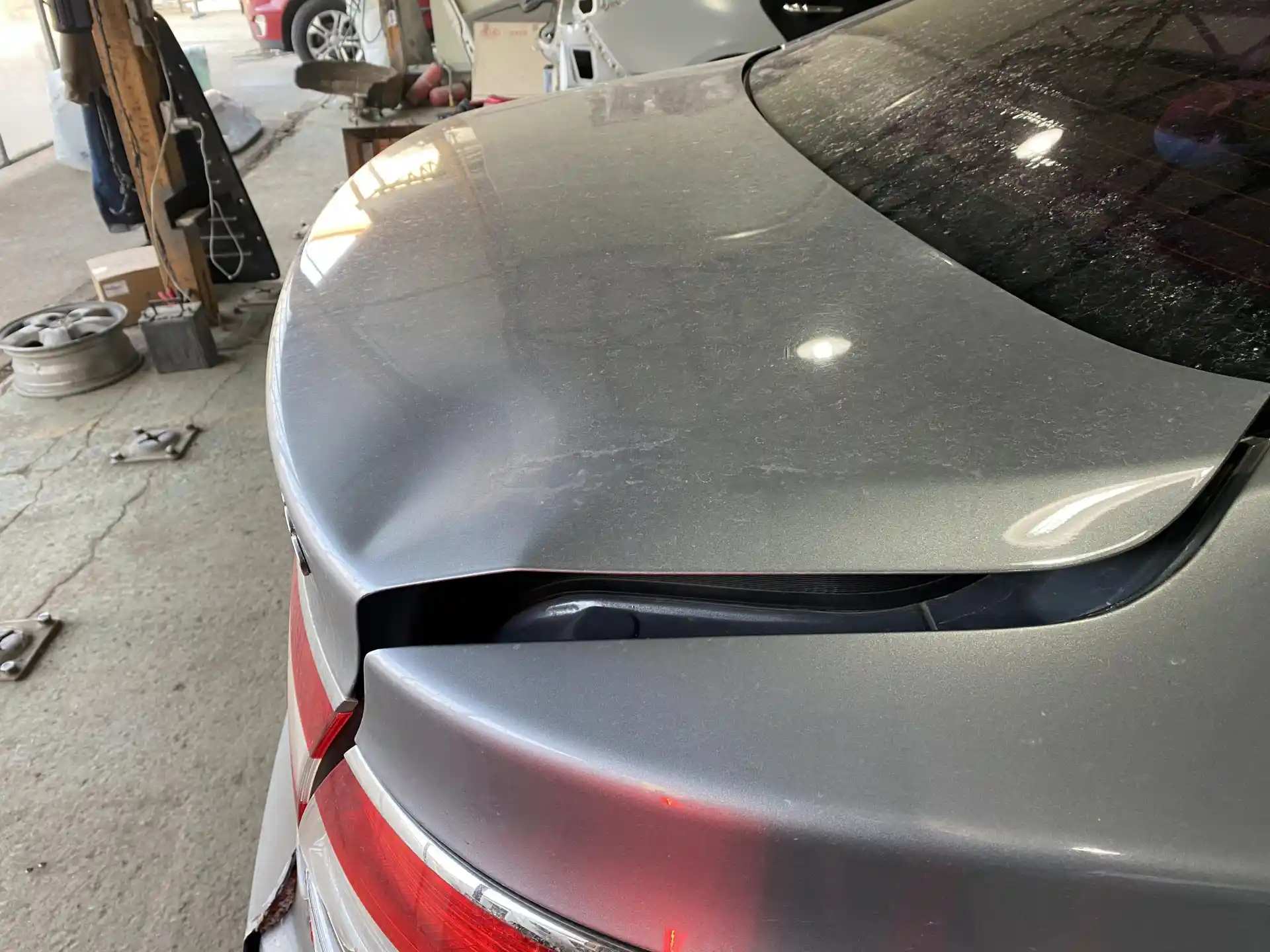
A luxury car trunk lid should sit evenly against the surrounding body panels, close smoothly, and remain securely locked. However, after a rear-end collision, trunk lid replacement, or repeated use, the lid may become misaligned. Common symptoms include uneven panel gaps, a trunk that sits too high or low, difficulty closing, and water leaks around the trunk opening.
On luxury vehicles such as Bentley, Ferrari, Lamborghini, Aston Martin, McLaren, Porsche, and Rolls-Royce, trunk lid alignment requires careful attention to body panel geometry, mounting points, locking mechanisms, and electronic functions.
Understanding the cause of the problem before replacing or adjusting parts can help repair shops avoid unnecessary labor and additional damage.
Before starting a repair, identify the symptoms and determine whether the issue affects alignment, closing, sealing, or electronic operation.
Uneven Panel Gaps
If the gaps between the trunk lid and the rear quarter panels are wider on one side, the lid may be incorrectly positioned. This can happen after a collision, previous bodywork, or improper installation of a replacement trunk lid.
Trunk Lid Sits Too High or Too Low
A trunk lid that sits above the surrounding body panels may have incorrect hinge positioning, damaged mounting points, or an improperly adjusted latch. If it sits too low, the latch or bump stops may require inspection.
Difficulty Closing or Latching
If the trunk lid requires excessive force to close, check the latch, striker, hinges, alignment, and surrounding body structure. Do not repeatedly slam the lid, as this may damage the latch or body panels.
Water Leaks or Wind Noise
Misalignment, damaged weatherstripping, or deformation around the trunk opening can prevent the seal from working correctly. Water entering the trunk may damage interior trim, electrical connectors, or control modules.
A systematic inspection should come before any adjustment.
Start by examining the trunk lid for dents, creases, paint damage, and signs of previous repairs. Check whether the panel is distorted or whether the damage is limited to its mounting hardware.
Next, inspect the hinges and their mounting points. Look for bent brackets, loose fasteners, damaged threads, or signs that the mounting position has shifted.
If the trunk lid was recently replaced, confirm that the replacement part is appropriate for the vehicle's model year and body configuration.
For luxury vehicles, trunk lids may differ in material, shape, integrated trim, spoiler configuration, camera openings, or other equipment. A panel that appears similar may not be a direct match.
Important: If the rear body structure or trunk opening has been deformed in a collision, adjusting the hinges alone will not correct the underlying problem. Structural measurements and repairs may be necessary before final panel alignment.
Adjust the Trunk Lid Alignment
When the body structure and mounting points are confirmed to be in good condition, adjustment may correct minor alignment issues.
Step 1: Compare the Panel Gaps
Inspect the gaps around the entire trunk lid, including both sides, the rear edge, and the areas near the rear lights. Compare the height of the lid with adjacent body panels.
Use the vehicle manufacturer's specifications where available rather than relying only on visual judgment.
Step 2: Check Hinge Positioning
Depending on the vehicle design, the trunk lid may allow limited adjustment at the hinge mounting points. Follow the manufacturer's repair procedure and loosen fasteners only as specified.
Support the trunk lid securely during adjustment. Some luxury vehicles use heavy panels, powered opening mechanisms, or complex hinge arrangements.
Step 3: Reposition the Lid Carefully
Make small adjustments and reassess the gaps after each change. Avoid moving the panel too far in one direction, which can create new alignment problems on the opposite side.
If the mounting holes are damaged or the hinge is bent, replacing the affected component may be necessary instead of attempting further adjustment.
Step 4: Check the Latch and Striker
Once the panel position is correct, inspect the latch and striker for wear, damage, or incorrect positioning. Confirm that the lid engages securely without excessive force.
Do not use the latch to pull a badly misaligned trunk lid into position. This can place unnecessary stress on the mechanism.
Step 5: Inspect the Weather Seal
Check the trunk weatherstripping for tears, compression, displacement, or hardening. A damaged seal may cause water leaks even when the trunk lid appears properly aligned.
After the repair, verify that the lid closes smoothly and that the seal contacts the surrounding surface consistently.
Adjustment is not always the best solution. A replacement trunk lid may be necessary when the original panel has significant deformation, damaged mounting points, severe corrosion, or structural damage that cannot be repaired economically or safely.
Replacement may also be appropriate after a major rear-end collision, especially when the original panel no longer maintains the correct shape.
Before ordering a replacement, confirm:
● Vehicle make, model, and production year.
● Correct part number or OE reference number.
● Panel material and body configuration.
● Compatibility with integrated trim, spoilers, cameras, or other equipment.
● Whether the replacement is supplied painted, unpainted, or in its original finish.
For luxury car repair shops, a genuine OEM used trunk lid can be an option when the correct original part is available and its condition has been verified. Depending on the vehicle and repair requirements, a suitable aftermarket replacement may also be considered.
The right choice depends on fitment, condition, availability, total repair cost, and the customer's requirements.
Check Related Parts After a Rear-End Collision
For professional repair shops, checking related luxury car body parts after a collision helps prevent repeat repairs.
Trunk lid alignment problems may be symptoms of damage elsewhere. Replacing or adjusting the lid without checking related components can lead to repeat repairs.
Inspect the following areas as appropriate:
● Trunk hinges: Check for bending, wear, and damaged mounting points.
● Trunk latch and striker: Look for damage, excessive play, or improper engagement.
● Rear body panel: Check for deformation that affects the trunk opening.
● Rear bumper and quarter panels: Look for impact damage and uneven panel relationships.
● Tail lights: Confirm their mounting position and clearance around the trunk lid.
● Weatherstripping: Check for damage that could allow water ingress.
● Wiring and electronic components: Inspect affected wiring, powered trunk mechanisms, and related sensors where fitted.
If the collision has affected the rear body structure, follow the manufacturer's structural repair procedures before attempting final alignment.
Some luxury cars feature powered trunk lids, soft-close mechanisms, electric latches, hands-free opening, or electronic release systems.
After mechanical repairs, verify the functions fitted to the specific vehicle. Check that the trunk opens and closes correctly, the latch engages, and warning messages do not appear.
If the vehicle has powered hinges or an electronically controlled closing mechanism, follow the manufacturer's initialization, calibration, or diagnostic procedures where required.
Do not assume that a trunk lid is fully compatible simply because its shape matches. Differences in wiring, sensors, actuators, or equipment configuration may affect installation and operation.
7. How to Source the Right Luxury Car Trunk Lid Replacement
For professional repair shops, dealers, and parts distributors, accurate vehicle and part information helps reduce incorrect orders and unnecessary delays.
Before purchasing a replacement trunk lid, prepare the vehicle's VIN, model year, part number if available, and clear photos of the damaged panel. Include details about the damage and any integrated equipment.
A specialist supplier can use this information to help verify the part reference, available condition, and compatibility before shipment.
For buyers sourcing luxury car body parts internationally, request actual product photos and confirm the condition of mounting points, panel edges, and the finish. Discuss packaging arrangements in advance to reduce the risk of transport damage.
At Pbba Auto Parts, we supply luxury car replacement parts for professional buyers, including parts for Ferrari, Lamborghini, Bentley, Aston Martin, McLaren, Rolls-Royce, Porsche, Maserati, and other premium marques. Availability and sourcing options depend on the specific vehicle and part required.
If you need a replacement trunk lid or related rear body parts, send your VIN, OE number, or part photos to check compatibility and availability.
Conclusion
Luxury car trunk lid fitment problems can result from incorrect hinge adjustment, latch issues, damaged mounting points, previous repairs, or collision-related structural deformation.
Start with a thorough inspection, correct minor alignment issues according to the manufacturer's procedures, and check related body components before completing the repair. When the panel is damaged beyond an appropriate repair, verify the replacement part carefully to ensure correct fitment and functionality.
For repair shops and professional parts buyers, matching the trunk lid to the exact vehicle configuration is essential for achieving a clean finish and avoiding repeat work.

 EN